Mansa Musa ruled the Empire of Mali in the early 1300s. His empire stretched across West Africa, through parts of today's Mali, Senegal, the Gambia, Guinea and beyond, and it was one of the largest in the world at the time. Its wealth came from gold and salt.
In 1324, Mansa Musa set out across the Sahara on the pilgrimage to Mecca. Arab writers of the time described a caravan of tens of thousands of people. One report counted 60,000 men, including 12,000 enslaved servants. His camels were said to carry 300 pounds of gold each.
When the caravan reached Cairo, Musa gave a load of gold to every emir and royal official at the sultan's court, and his people bought and sold freely in the markets. So much gold poured into the city that its value fell. The historian al-Umari, writing about twelve years later, said gold in Egypt still had not recovered its old price.
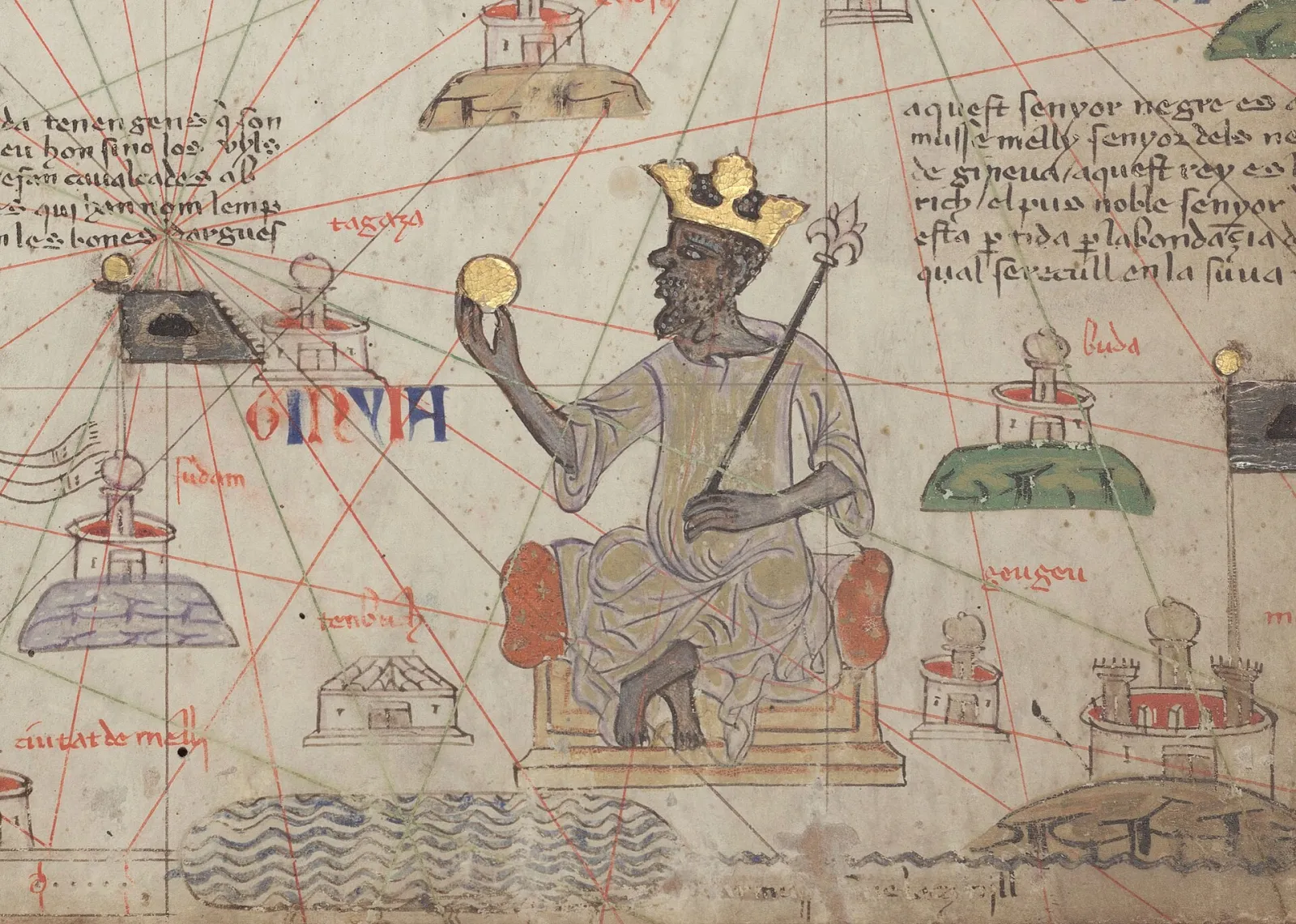
Word of the golden king reached Europe. In 1375, mapmakers in Majorca drew him on the Catalan Atlas: seated on a throne, in a gold crown, holding up a golden nugget.
Back home, Musa brought architects and scholars from across the Islamic world, among them the poet and architect Abu Ishaq al-Sahili, who travelled with him from Mecca. Musa built mosques in Gao and Timbuktu, and Timbuktu grew into a major center of Islamic learning, known for its scholars, schools and libraries.
No one can put an exact number on his fortune. But seven hundred years later, Mansa Musa is still remembered as one of the richest people in history.