On December 1, 1955, in Montgomery, Alabama, Rosa Parks refused to give up her seat on a city bus to a white passenger. She was arrested.
The driver that evening was James Blake. Twelve years earlier, in 1943, the same driver had put her off his bus. She had avoided his buses ever since.
Rosa Parks was not simply a tired seamstress who happened to be in the wrong seat. She was the secretary of the Montgomery branch of the NAACP, and she had spent years working for civil rights.
Her arrest sparked the Montgomery bus boycott. For 381 days, Black residents refused to ride the city's buses.
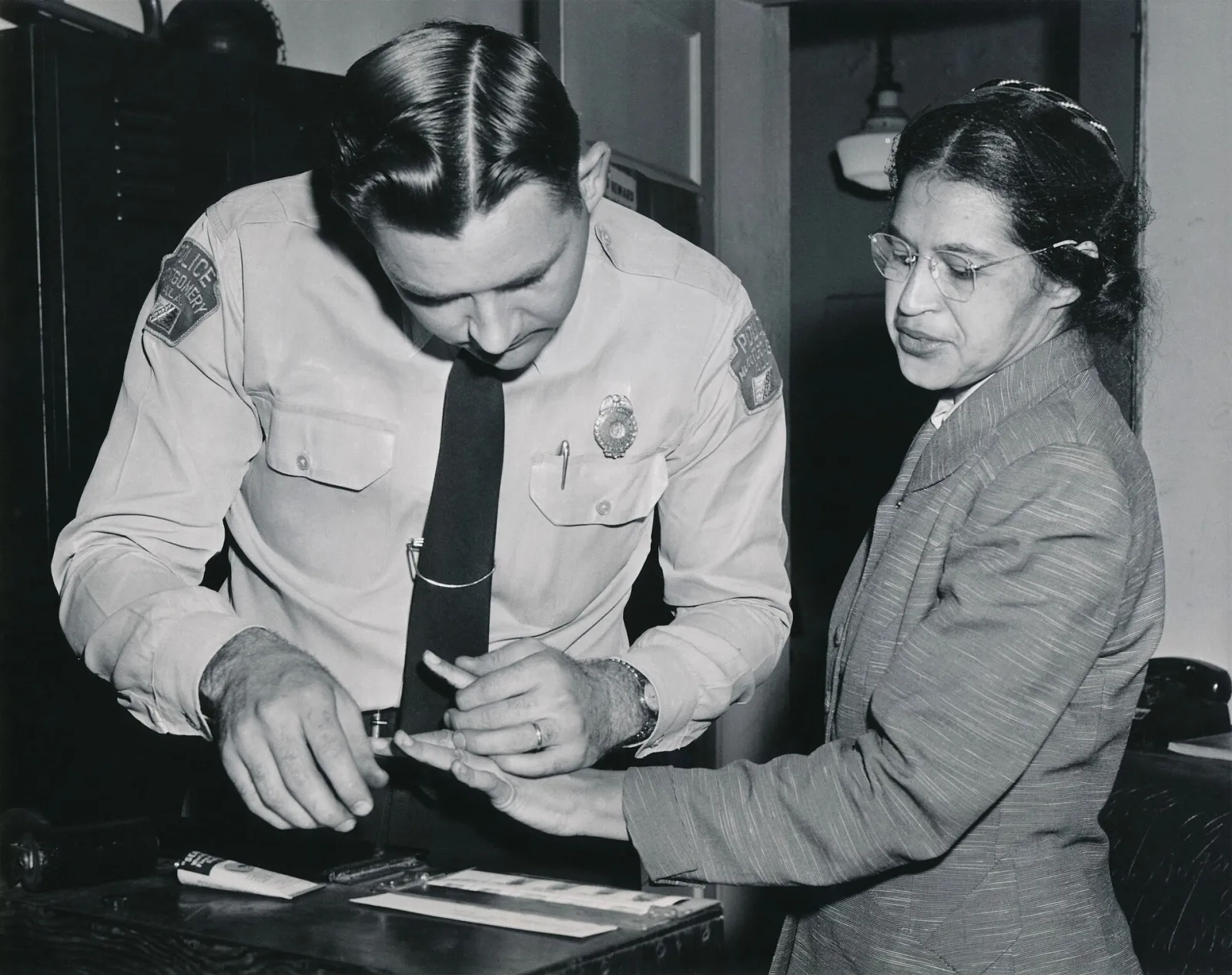
In February 1956, Alabama indicted dozens of boycott leaders under an old anti-boycott law. Rosa Parks was arrested again, and on February 22, 1956, she was photographed being fingerprinted. That is the picture most people know, and it is often shown as if it came from her arrest in December 1955.
In 1956, the Supreme Court ruled that segregation on Montgomery's buses was unconstitutional. In December 1956, Rosa Parks rode at the front of a Montgomery bus.
Her stand came at a cost. She struggled to find work, and in 1957 she and her husband moved to Detroit. When she died in 2005, she became the first woman to lie in honor in the United States Capitol.
One seat. 381 days. A country changed.