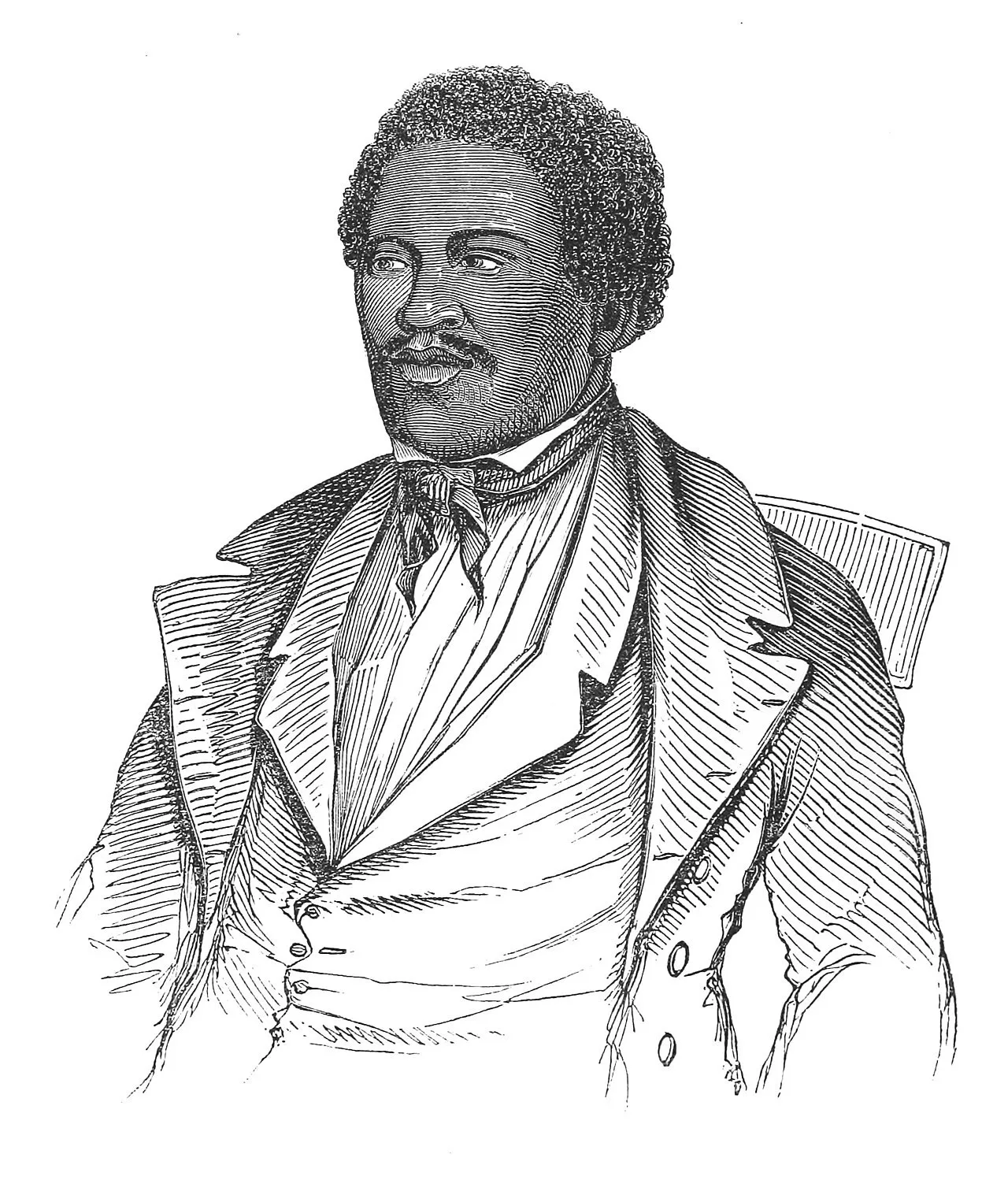
Henry Brown was born into slavery in Louisa County, Virginia, around 1815. As a young man he was sent to work in a tobacco factory in Richmond. There he married an enslaved woman named Nancy, and they had three children.
In 1848, Nancy's enslaver sold her and the children to a new owner in North Carolina. She was pregnant with their fourth child. Henry Brown decided he would be free, whatever it took.
Two men helped him: James Caesar Anthony Smith, a free Black man from his church choir, and Samuel Smith, a white shoemaker who was paid for his part. On March 23, 1849, they sealed Brown inside a wooden box about three feet long, two feet wide and two and a half feet deep, marked "This side up with care," and shipped it to the Anti-Slavery office in Philadelphia.
For more than a day the box travelled by wagon, train and steamboat. Despite the label, it was set upside down, and for miles he rode on his head. He stayed still and silent.
In Philadelphia, abolitionists, among them James Miller McKim, pried off the lid. Brown climbed out alive and sang a hymn he had prepared, based on Psalm 40. A few weeks later, at an anti-slavery convention in Boston, he was given the name the world remembers: Henry "Box" Brown.
In 1850 a new Fugitive Slave Law made it easier to capture escaped people in the North, so Brown sailed to England. There he toured for years with a giant moving panorama about slavery, and later performed as a magician. He died in Toronto in 1897.