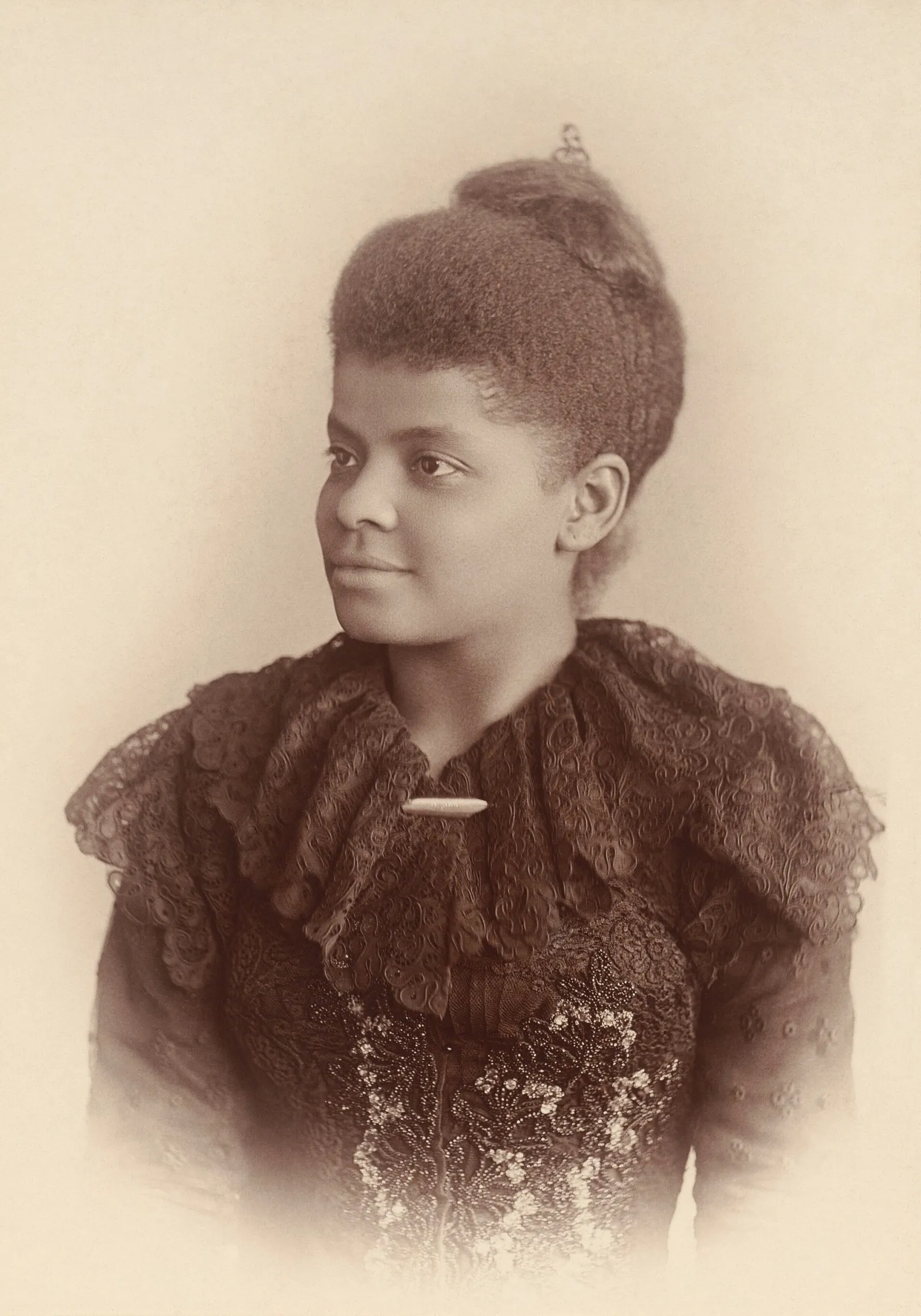
Ida B. Wells was born into slavery in Holly Springs, Mississippi, in 1862.
In the 1880s, as a young teacher, she boarded a train in Tennessee and took her seat in the ladies' car. The conductor ordered her to move to the smoking car. She refused. When he grabbed her to drag her out, she later wrote, "I fastened my teeth in the back of his hand." It took the conductor and two other men to pull her off the train.
She sued the railroad, and she won: a local court awarded her 500 dollars. Then the Tennessee Supreme Court reversed the decision.
So she picked up a pen. She became a journalist and co-owner of a Memphis newspaper, Free Speech. In 1892, a white mob in Memphis murdered three Black men who owned a grocery store. Wells investigated and printed the facts. A mob destroyed her newspaper office, and she was warned never to come back.
She never did. From Chicago, she spent the rest of her life investigating and exposing lynching across the South.
Ida B. Wells died in 1931. In 2020, the Pulitzer Prize board awarded her a special citation for her "outstanding and courageous reporting." Eighty-nine years after her death.
They took her seat, her paper and her city. Never her voice.